
THE DAILY · WED JULY 22, 2026 · 4 ITEMS
The Frame
In one week the deportation apparatus made itself permanent and invisible: it bought the California prisons it used to rent, packed detainees into rooms with no beds, and went to court to keep its agents masked and its feeds warrantless. Capacity up, visibility down.
FIG.01
ICE Buys Its Own Prisons
CALMATTERS · KPBS · FOX · JUL 22
What Happened
DHS bought two California immigrant detention centers — the 2,560-bed California City facility and the 1,994-bed Otay Mesa center — from private-prison company CoreCivic for $1.5 billion. CoreCivic keeps operating both; the government now owns the buildings. DHS said California won't cooperate: unlike Florida or Oklahoma, ICE can't rent beds from local partners here.
What It Means
This is the capacity lane going permanent. Renting leaves ICE exposed to states that won't cooperate; owning roughly 4,500 beds routes around that, and around the state oversight California says federal ownership strips.
Why It Matters
The thesis question — is the capacity actually being built — now has a $1.5 billion answer. Watch which blue-state facility gets bought next.
CONNECTS → Building the Machine of Mass Detention
FIG.02
Warned, and Packed Anyway
THE WASHINGTON POST · JUL 22
What Happened
For weeks, ICE officials warned each other about dangerous overcrowding at New York's 26 Federal Plaza, where detainees were held in rooms with no beds, showers, or full-time medical staff, a Washington Post review of internal records found. Arrests outran transport, stranding dozens for days in rooms meant for under twelve hours; people with tuberculosis and kidney failure went without care.
What It Means
These are the predictable conditions when an arrest rate outruns humane capacity — and the warnings show the agency knew.
Why It Matters
The overcrowding is the argument for the $1.5 billion purchase and the warehouses ICE keeps eyeing — the crisis justifying its own cure.
CONNECTS → Building the Machine of Mass Detention
FIG.03
A Republican Brake on Flock
DAILY CALLER · YOURNEWS · JUL 15
What Happened
Rep. Keith Self (R-TX), with co-sponsor Rep. Andrew Clyde (R-GA), introduced the PRIVACY Act to bar federal agencies from pulling Flock license-plate-reader data without a warrant. Flock cameras track vehicles and people across thousands of communities; the bill lands amid nationwide protests and residents destroying cameras.
What It Means
The notable part is the direction of the brake. The pushback is coming from Republicans and the right-leaning towns that installed the cameras for crime — the Fourth Amendment, not partisanship, doing the work.
Why It Matters
Whether it reaches a committee vote tests if surveillance skepticism survives an administration that wants the feeds. Watch which Republicans sign on.
CONNECTS → The TikTok Heist: national security as a surveillance machine
FIG.04
The Fight to Stay Masked
WIRED · JUL 22
What Happened
More than thirty states have moved to require ICE agents to show their faces and visible ID, following California's No Secret Police and No Vigilantes Acts; the administration has sued to block them, Wired reports. The Justice Department has filed against California, New Jersey, New York, Virginia, and New England states; in April a court paused the ID rules.
What It Means
An agency fighting this hard to keep its agents anonymous is telling you what it is for. Masks and blocked IDs erase the name and badge number accountability runs through.
Why It Matters
Permanence and opacity at once. If the appeals keep siding with federal anonymity, masked enforcement becomes the norm.
CONNECTS → Building the Machine of Mass Detention
What to Watch
- / The next buyout — whether DHS buys more beds in non-cooperating states, using the California deal as the template.
- / 26 Federal Plaza — whether a court or Congress forces the conditions data open, or the overcrowding repeats elsewhere.
- / The PRIVACY Act — which Republicans co-sign Self's warrantless-Flock bill, and whether it reaches a vote.
- / The mask injunctions — appellate rulings on whether states can compel federal agents to show ID.
- / CoreCivic's cut — a private operator now running federally-owned prisons; watch who profits from the permanence.
The Pressure Map
Where our coverage concentrated — this week, drawn to scale
detention-state · 5
surveillance-state · 5
rolling-coup · 3
war-machine · 2
concentration-economics · 1
epistemics · 1
The Long View · the deep one
Next in the series · Jul 23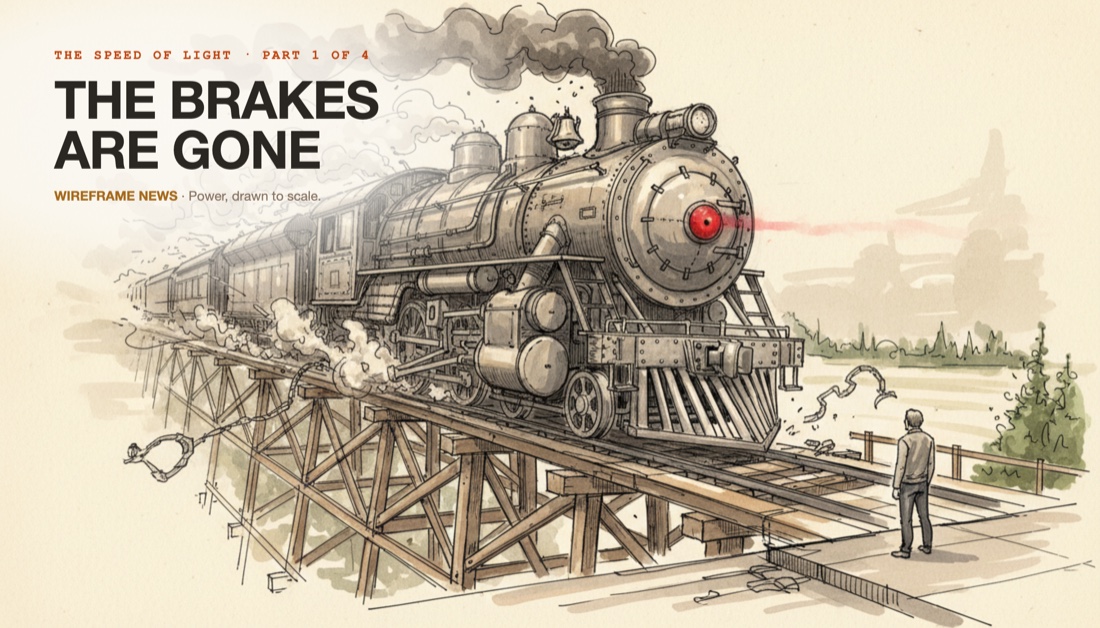
Part 1 of 4 — The Brakes Are Gone — The oldest brake on power was friction: the human effort it took to persuade, produce, and mobilize. What happens when it comes off.
Just released — read The Timeline You Are On — the flagship opener — six stations, and the one you’re standing in.
This is Wireframe News—the apparatus bought its own walls and went to court to dim its own lights, and called both officer safety.